Generic selectors
Exact matches only
Search in title
Search in content
Post Type Selectors

05-05-25 | INP IS THE PAINELIST OF THE 11TH EDITION OF MMEC

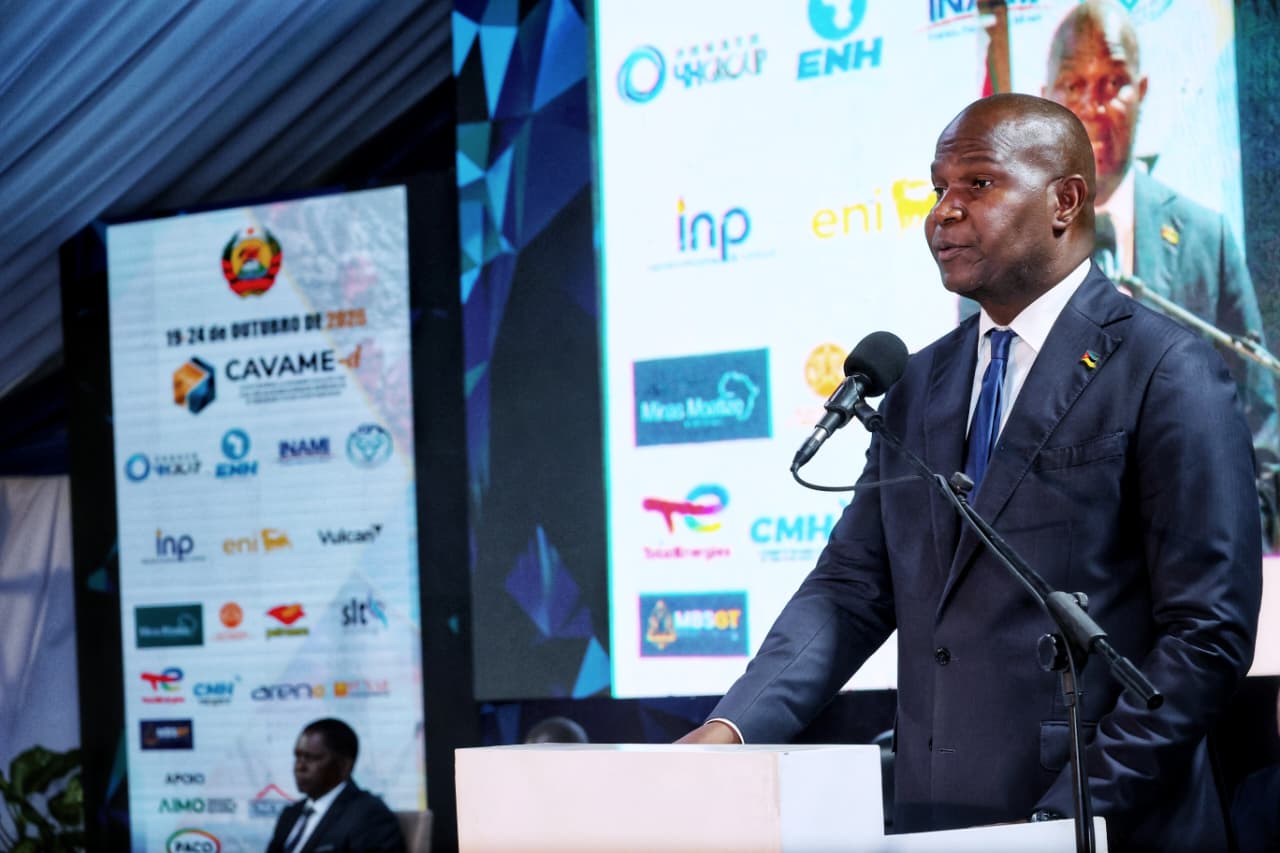
The National Petroleum Institute is taking part this week as a prominent speaker in the 11th edition of the Conference and Exhibition of Mining and Energy in Mozambique (MMEC 2025), one of the most important regional forums dedicated to extractive sectors.

Under the Ministry of Mineral Resources and Energy (MIREME), MMEC, in the capital of the country, brings together government decision-makers, industry representatives, entrepreneurs, experts and critics to discuss the latest developments in the mining, oil and gas sectors, and to identify solutions to the challenges that are required, at a juncture marked by the announcement of new funding and research and production projects for natural gas.

According to the President of the INP, Nazário Bangalane, the participation of the INP in this issue reinforces the continuous commitment to the promotion and monitoring of the oil sector, highlighting the strategic role that the INP has played over the last 20 years in the consolidation and growth of industry. Considerations will also be made on the impact of the new regulatory instruments of Local Content and on the improvement of the socio-economic conditions of the communities affected by the investments of the oil and gas industry.

The INP will be represented by a high-level delegation, which will intervene in thematic sessions, namely the round table of international experts bringing a comparative approach to legal aspects of oil, gas, mining and energy, the session on the critical point of upstream research, whose debate will focus on strategies to attract global investment and expand the hydrocarbon research and production sector in Mozambique, and, finally, the panel focused on sustainable policies of local content, country industrialization and value chain in Mozambique.

Under the motto, "Investing in a New Age: Transforming Mozambique’s Natural Resources to Drive Industrialization and Regional Integration, this conference takes place at the Joaquim Chissano Conference Center on 7 and 8 May, with the participation of more than 600 delegates, between national and international, including more than 70 speakers from different areas, distributed by 10 specialized sessions.

MMEC is a platform for the exchange of knowledge and technology transfer to the value chain of Mozambican mining and energy.

For more information, please contact the National Institute of Petroleum, located on Rua dos Desportistas No.259, Maputo, by numbers 21248300 or 839511000. You can also write to the email comunicacao@inp.gov.mz and visit our Facebook and LinkedIn pages to be up to date with this and other highlights.

Recent News

01-12-2025 | CAPACITATION OF PETROLEUM AND GAS TABLES

MOZAMBIQUE ENHANCES PETROLEO AND GAS COMPETENCES: STATE FUNCTIONERS IN STRATEGIC TRAINING IN JAPAN Maputo, 1 December 2025 – Fourteen (14) technicians from various state institutions are in Tokyo, Japan, to participate in a training specialized in oil and natural gas, in the framework of cooperation between Mozambique

Read more
EnglishenEnglishEnglish

AREA 1

Following the 2nd open competition for the granting of areas for the research and production of hydrocarbons, the companies Anadarko Mozambique Area 1 and the National Hydrocarbon Company were awarded Area 1 in offshore environment of the Rovuma Basin. The area is located in the northern part of Cabo Delgado Province, in shallow to very deep waters. The Hydrocarbon Research and Production Areas Grant Agreement (CCPP) was signed on 20 December 2006 and is effective as of 1 February 2007.

PROSPERITY DISCOVERING AREA

Median estimate of 43 tcf (cubic foot trillions) of gas.

4 Transzonal Reservoirs:

  • Upper North Oligocene;
  • Upper South Oligocene;
  • Oligocene Lower;
  • Upper Eocene;

TUBARAN DISCOVER AREA

Median estimate of 3.4 (cubic foot trillions) Tcf of natural gas.

THE AREA OF DISCOVERMENT

Median estimate of 8.4 Tcf (cubulated foot trillions) of natural gas

The Paleocene Reservoirs.

THE AREA OF DISCOVERMENT

Tigris Shark Discovery Area (1254 km2), has 3 reservoirs of the Cretaceous (K1,K2 and K3), the K2 being the best in Orca and Shark-Tigre and has a median estimate of 0.323 Tcf (cubic foot trillions) of natural gas.

UNKNOWN TUGRE AND ORCA (CRETACICO LEQUE 1, 2 E 3), ROVUMA OFFSHORE AREA 1

The complete technical evaluation of the potential of the Cretaceous in Area 1, between the Areas of Discovery Tubarão Tigre and Orca, determined that it contains small, discontinuous and low quality reservoirs, and this would probably present significant challenges in the supply of trade amounts of gas. Of the three reservoirs of Cretaceous (K1,K2 and K3) evaluated, the best is K2 in Orca and Shark-Tiger that has an average resource of 0.323 Tcf (cubic foot trillions) of natural gas.

FOUND OUT ORCA (LECK OF MEDIO PALEOCEN), ROVUMA OFFSHORE AREA 1

This discovery was made in Area 1 by Anadarko in 2013 through borehole Orca-1, whose reservoir is the age of the Middle Paleocene, was subsequently evaluated by the holes Manta-1, Orca-2, Orca-3 and Orca-4.

The discovery is located about 10 km from the coast line, 250 km from the city of Pemba. This reservoir is of Middle Paleocene age and is not shared. The average estimate of resources is about 8.4 Tcf (cubulated foot trillions) of natural gas in situ, according to estimates submitted by Total.

The reservoir in the Orca discovery lies at depths ranging from 4000 to 5000m below the mid sea level, and the water column from about 600m to 1200m. The extension is about 30 km.

UNCOVERED TUBARON (EOCENO), ROVUMA OFFSHORE AREA 1

This discovery was made by Anadarko in January 2011 through the Jaw-1 hole and evaluated by the Shark-2 hole (negative) in 2013. The discovery is located about 25 km from the coast line, 50 Km of the Northeast of the district of Mocímboa da Praia and 200 Km of the Northeast of Pemba City.

The reservoir is completely in Area 1. The average estimate of resources is about 3.4 tcf (cubic foot trillions) of gas in situ.

The reservoir is at a depth of 3500 to 4000 metres below the average sea level. The water column ranges from 800 to 1200 meters. The extent of the Shark discovery is about 20 km east-oriented.